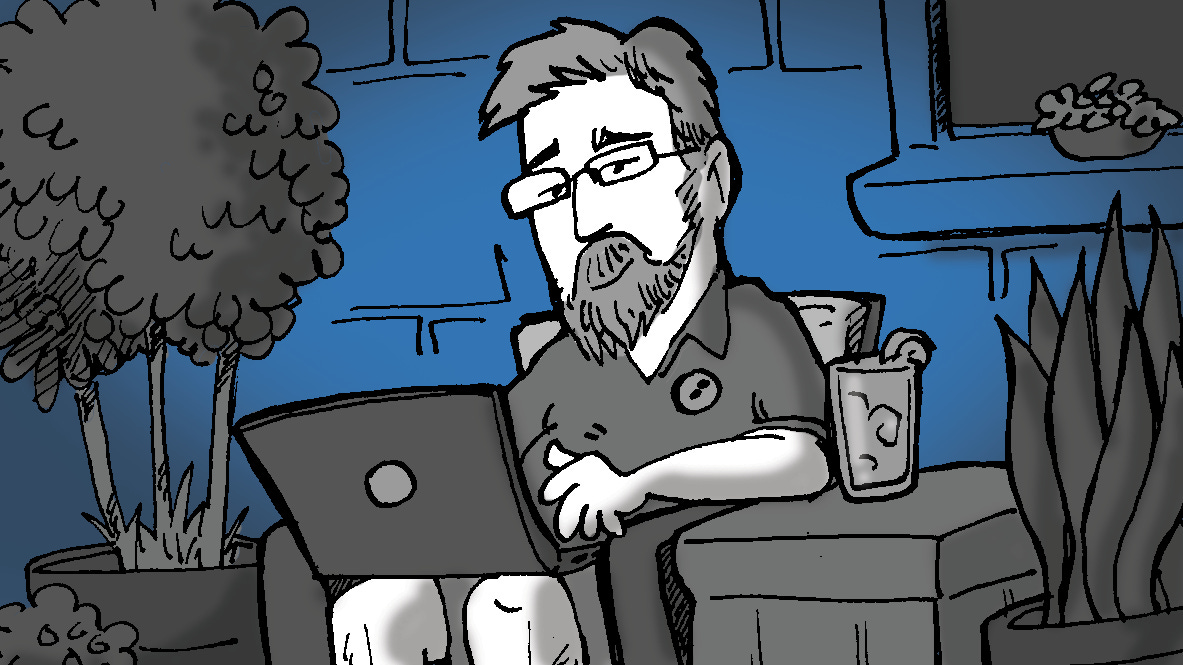
Exploring a Back-Patio Experience
Sharing the experience of understanding.
Years ago, my wife and I gave my father-in-law a copy of Zen and the Art of Motorcycle Maintenance. We’ve just recently re-inherited it. I took it to my office to shelve it with other valued volumes, but first, I opened the book. I just happened to find the page featuring a chart illustrating the concepts of objective and subjective reality—which are key components to The Unknowable Truth. I haven’t read Zen and the Art of Motorcycle Maintenance since college. That was before I knowingly began my pursuit of The Unknowable Truth. Now, it appears I’ll soon be reading the book again.
I’m delighted but not surprised by the serendipity of the rediscovery. When you listen and watch for The Unknowable Truth, you encounter it just about everywhere. In her excellent book Grit, The Power of Passion and Perseverance, Angela Duckworth quotes Nietzsche, who said great things are accomplished by those “people whose thinking is active in one direction, who employ everything as material, who always zealously observe their own inner life and that of others, who perceive everywhere models and incentives, who never tire of combining together the means available to them.”
My family and friends will attest that I see examples of The Unknowable Truth everywhere, and I never tire of talking about it. That’s part of the reason I started this Substack—so I could explore the ideas as they emerge, get them out of my head, release them to the world, and bore other people besides just my family and friends. So far, I’ve written most of my offerings as if they were book chapters. But Substack is not a book, and it occurred to me that I have an opportunity here to sketch out ideas as I find them. I can explore out loud.
When Derek Thompson stepped away from The Atlantic to join Substack and explore his work on “abundance, science, technology, media, and the anti-social century,” he noted he’d be writing two types of articles. The first he calls “front porch journalism,” which he says is “writing for mass public consumption and the edifice I want the newsletter to show the world.” The second type he calls “back-patio journalism,” which he describes as “more personal, unfinished, slightly intimate, and honestly uncertain thoughts.”
So far, I’ve been mostly focused on front-porch-style essays, but I feel liberated by the idea of writing back-patio essays so I can share the ideas I encounter every day everywhere I look.
I believe writing is thinking. Some time ago, I wrote a post on my Advocate Craft Substack about how I approach my work. I read about it, think about it, talk about it, and write about it. “It involves eliminating irrelevant information and forming what’s left into a cohesive idea. Call it information refining. It’s a process, and for the person going through the process, it’s an experience—the experience of understanding.”
So this is an invitation to join me on the back patio to share in my process—to share the experience of understanding—as I explore The Unknowable Truth.